

Russia Flags: Symbol, Meaning, Pictures
The Russian flag, a tricolor of white, blue, and red, flutters proudly above the vast expanse of the nation. The white, blue and red Tricolour flag was first used by Tsar Peter the Great in the early 18th century as a symbol of Russia.
Table of Contents
Russian Flag Symbolism and Meaning:
- White: Traditionally associated with purity, faith, and openness.
- Blue: Represents loyalty, truth, and courage.
- Red: Symbolizes bravery, strength, and determination.
- Horizontal Stripes: The horizontal arrangement reflects the vastness of the Russian landscape and the equality of its people.
Flag Day in Russia: Russia celebrates Flag Day on August 22nd, commemorating the adoption of the tricolor in 1991.
The flag has three equal bands of white on the top, blue in the middle and red on the bottom.

Authorities issued an official color calibration standard "GOST" to enable accurate reproduction across media. The Russian federal subject regions and government organizations use the national flag as a basis for incorporating additional symbols. Russian athletes proudly display the flag during events like the Olympics when they participate as Team Russia to represent their motherland.
Flags of the Russian Federation
State flag
Flag | Date | Use | Description |
1991–1993 |
| Flag of the Russian Federation from 12 December 1991 to 11 December 1993. Previously used by anti-GKChP protesters during the 1991 August Coup and then as flag of the Russian SFSR during the final days of the USSR. Still included in the State Heraldic Register. | |
1993–present | Proportion changed from 1:2 to 2:3. First, the Decree of the President of the Russian Federation "On the State Flag of the Russian Federation", adopted on December 11, 1993, then Constitutional law "On the State Flag of the Russian Federation" adopted on 25 December 2000. |

 State flag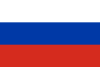
The Flag of Russia: Key Facts
1. The flag of Russia, also known as the tricolor, consists of three horizontal stripes of white, blue, and red.
2. The flag's proportions are 2:3, meaning the width is twice the height.
3. The white stripe at the top symbolizes peace, purity, and innocence.
4. The blue stripe in the middle represents loyalty, faith, and trust.
5. The red stripe at the bottom signifies courage, valor, and love.
6. The tricolor design of the flag has been associated with Russia since the 17th century.
7. The flag was officially adopted as the national flag of Russia on August 22, 1991.
8. The current design of the flag is a modification of the flag used during the Russian Empire.
9. The flag was temporarily replaced during the Soviet era with the red flag featuring the hammer and sickle.
10. The Soviet flag was used from 1923 until the collapse of the Soviet Union in 1991.
11. The flag's colors are symbolic and have historical significance in Russian culture.
12. The flag of Russia is similar to the flag of the Netherlands, but the colors are arranged differently.
13. The flag is prominently featured during national holidays and official ceremonies in Russia.
14 . The flag is often displayed alongside the Russian coat of arms, which features a double-headed eagle.
15. The Russian flag is recognized as a powerful symbol of national identity and pride.
16. The flag is often seen at sporting events, representing the Russian national teams.
17. The flag has inspired various artistic and creative interpretations in Russian culture.
18. The tricolor design has influenced the flags of many other countries.
19. The flag has remained unchanged since its adoption in 1991.
20. The flag can be seen flying atop government buildings, military installations, and public spaces throughout Russia.